
Many new SME business owners struggle to differentiate between branding and marketing, especially when starting out or growing their business. You may wonder whether they are the same or simply work together to achieve a common goal.
What many business owners do not realize is that confusing the two could hamper your business’s growth. Without understanding the difference, the budget may be wasted, customers may misunderstand the message, or worse, you may target the wrong audience.
So, what is branding, and how does it differ from marketing? Read on to debunk this common confusion that many business owners experience as they navigate their businesses.
What Is a Brand?
A brand is the perception people have of your company; it’s more than just your logo. This perception and reputation often linger in people’s minds. People tend to remember the personality your brand exudes—does it have a premium feel, like Apple? Or is it associated with a memorable message, like Nike’s “Just Do It”?
You already have a brand without marketing because it reflects your identity. So, think carefully about what you want people to have in mind when they hear about your brand.
When building your brand, keep the following in mind:
- Mission and values
- Personality
- Visual identity
- Voice and messaging
- Customer perception
What Is Marketing?
Marketing is the set of strategies and tactics used to promote your brand to attract people and convert them into customers. Now that you know what your brand is, it guides marketing to amplify your message and reach your audience. Without marketing, your brand would stay invisible. If your focus is on acquiring customers, that’s marketing.
It focuses on driving traffic, generating leads, and increasing conversions in the short to mid-term through channels such as:
- Paid ads (Google, Facebook, TikTok)
- Content marketing (blogs, videos, social posts)
- Email marketing campaigns
- Special promotions and offers
So, ask yourself: Have people noticed your marketing efforts and purchased from you?
Brand vs Marketing: Core Differences
At its core, branding is about who you are—your values, personality, and the impression you leave on people. Marketing, on the other hand, is about what you do—the campaigns you use to communicate that identity and drive measurable results for your business.
Key Differences at a Glance
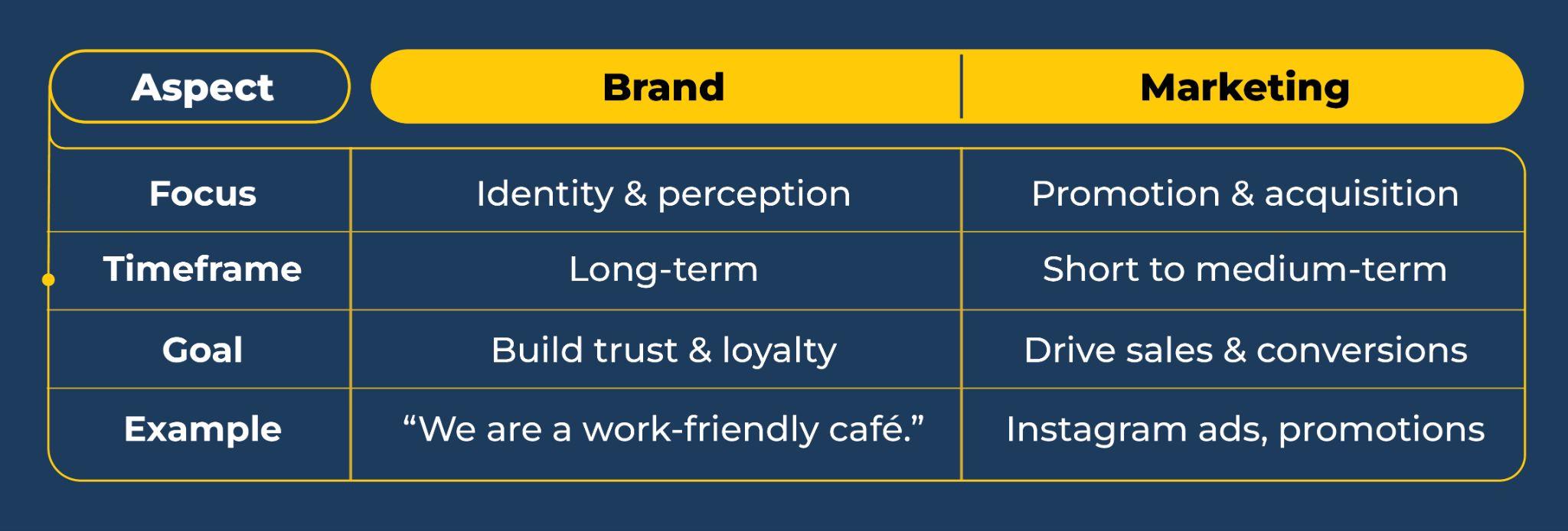
Understanding this distinction helps business owners know that a brand without marketing is invisible, and marketing without a brand is inconsistent.
How Brand and Marketing Work Together

Branding and marketing depend on each other. Your brand defines what message you want to convey, while marketing spreads that message to the public. Without a strong brand, your marketing efforts feel disorganized and unclear; without effective marketing, no one knows your brand exists.
When people trust and recognize your brand as credible, your customer acquisition cost (CAC) decreases. It becomes easier to attract customers to buy your product or service without spending excessive money.
However, when your brand is unknown, you’ll need to invest more in marketing. Unlike well-established brands that require minimal convincing, you’ll need to run numerous ads to raise awareness and attract customers.
Why the Difference Matters for Growing Companies
Differentiating branding from marketing is crucial not only for avoiding inconsistent messaging but also for allocating budgets effectively to build long-term equity rather than chasing short-term gains. It helps steer clear of “performance marketing traps,” such as over-reliance on ads.
What happens when you fail to grasp the difference? You may end up spending excessively on inefficient ads, leading to an inconsistent message. In turn, your brand becomes forgettable to your customers.
Once you clearly define your brand identity and get the marketing strategies right, people develop strong trust in your brand, making your marketing efforts more fruitful.
Common Mistakes Companies Make
Common mistakes arise when you treat the brand as merely a logo. Continuously running the ads without clear brand positioning, overlooking brand voice across multiple channels that contradict one another, and—worst of all—copying competitors instead of differentiating your brand (even if you think you’re drawing inspiration) can all cause you to lose customers, as they begin to lose trust in your brand.
For example, a work-friendly café can quickly fix this by consistently promoting ‘a friendly, productive coworking space for freelancers’ across its website and social media, while highlighting unique perks like free Wi-Fi and refillable coffee throughout the day.
When to Focus on Brand vs Marketing

When starting a new business, build a basic brand foundation first, then use marketing to attract early customers by investing in ads, social media, and promotions.
As your business grows, strike a balance between marketing and branding by ensuring your brand identity guides every marketing effort. Marketing now reinforces a consistent message that strengthens brand recognition.
For established companies, customers already know you, so brand identity becomes even more important than running new marketing campaigns, as branding helps people remember your business and remain loyal over time.
Think of it this way: your brand sets the direction, and marketing drives the results.
Key Takeaway
Brand and marketing are distinct concepts; however, they need to work closely together for a business to succeed. Business owners who understand that brand is what people feel about you, and marketing is how you make them feel, will see their business continuously growing.
Whether you’ve just started your business, need to earn trust, or are already growing and aiming to attract and convert customers, start today by clearly defining your brand values so that every marketing effort reflects them.
Your brand is the foundation, and marketing is the engine. At Signcotive Creative Studio, we’ll help you get both right.